🩺 2 Week CNA Course – Fast CNA Training Programs Near You
🔥 Paid CNA Training Program | 2-Week CNA Classes | Earn While You Learn | Work-Family Balance
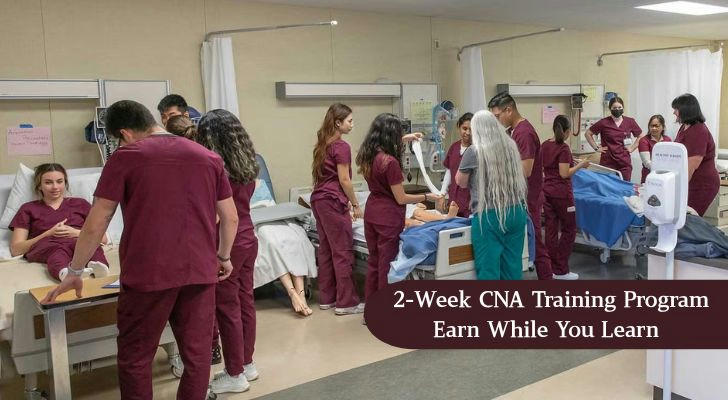
Dreaming of a healthcare career but short on time or funds? 2-week CNA training courses provide a fast, flexible route to certification. This program combines instruction with paid, hands-on training, so participants continue earning income while gaining practical experience. In just two weeks, gain the skills, training, and credentials to start working as a Certified Nursing Assistant.
 Why Choose a 2-Week CNA Training Course?
Many aspiring nursing assistants face challenges such as: Limited time to attend full-time school Rising tuition and exam costs Uncertainty about available financial support
These initiatives — offered through state workforce agencies or partnering healthcare employers — make it easier to start your career by providing:
 State-approved CNA certification
 Access to financial aid
 Hands-on clinical experience with licensed facilities
 Career guidance and job placement support
The entire course lasts 2-4 weeks, learners can complete CNA training in as little as two weeks, gain practical experience, and prepare confidently for the state certification exam — all while reducing the financial burden of career advancement.
Skills You Gain During Paid CNA Training
Paid CNA training programs in the U.S. are designed to equip you with essential clinical and interpersonal skills through a blend of classroom instruction and hands-on clinical experience. Here are the core skills you can expect to develop:
| Skill Category | Specific Skills & Competencies | Real-World Application Example |
|---|---|---|
| Personal Care (ADLs) | Bathing, grooming, dressing, toileting, feeding, and oral hygiene assistance for patients . | At Rochester Regional Health (NY) , trainees practice these skills under supervision in long-term care facilities like Unity Living Center . |
| Basic Nursing & Monitoring | Taking vital signs (blood pressure, temperature, pulse), measuring and recording fluid intake/output, and collecting specimens . | Trainees in programs like those at Archbold (GA) learn to accurately monitor and report patient health changes to supervising nurses . |
| Safety & Mobility | Safely transferring patients (using gait belts or lifts), turning and positioning bedridden patients, and ambulation assistance . | Programs emphasize proper body mechanics to prevent injury to both patient and caregiver, a skill practiced daily in clinical rotations. |
| Patient Interaction & Communication | Providing emotional support, engaging patients in conversation, respecting privacy, and effectively communicating with the nursing team . | Erica Love, a CNA at Archbold Living in Cairo, shared that building trust with residents and hearing how much she means to them is deeply rewarding . |
| Infection Control & Safety | Proper hand hygiene, using personal protective equipment (PPE), and following facility protocols for cleanliness and disease prevention . | Programs stress this as a foundational skill to ensure patient and personal safety in all healthcare settings. |
 CNA Career Outcomes and Salary Insights
After obtaining certification, you will have the opportunity to work in the following fields:
- Hospitals
- Nursing homes
- Home healthcare agencies
- Rehabilitation centers
Compensation & Career Path:
- Paid Training: During onsite(Weeks 2-3), trainees receive $15.50/hour.
- Upon Program Completion: Offer of full- or part-time evening/night-shift employment.
- Certified Pay Progression: $21.25-$30.76/hour after passing the NYS CNA exam + applicable shift differentials.
Career development:
CNA is an excellent stepping stone into the nursing profession, with opportunities to advance to LPN/LVN or RN roles, as well as specialization or leadership positions.
 Who is the 2-Week CNA Course For? Benefits by Age Group
Age Group | Key Benefits & Motivations | Ideal Career Path | Practical Tip |
|---|---|---|---|
| 18-25 Years Old | Fast, affordable start with minimal debt. Perfect for recent grads or those testing a healthcare career. | A stepping stone to become an LPN or RN. | Look for programs with job placement help to land your first role quickly. |
| 26-45 Years Old | Efficient career change. The short timeline minimizes income disruption. Stable, in-demand work fits family life. | Specialize in areas like geriatrics or home health. | Use flexible hybrid schedules (online theory + in-person labs) to balance training with current job or family duties. |
| 46-65 Years Old | A meaningful “encore” career. Find purpose in patient care. Training is faster than a traditional degree. | Stable, rewarding work in nursing homes, assisted living, or home health care. | Some employers, like LECOM Health, sponsor training and offer immediate jobs post-certification. |
| 65+ Years Old | Stay active and contribute. Flexible, part-time schedules are common. Deep life experience enhances patient compassion. | Part-time or per-diem roles in community settings. | Ensure the program’s physical demands align with your capabilities. Seek shorter shift opportunities. |
 How to Apply for a Paid CNA Training Program
Getting started is simple:
- Check eligibility via your local workforce agency or WIOA website.
- Search approved programs at [CareerOneStop].
- Submit documents — ID, education history, background check.
- Enroll in a 2-week CNA course and begin online theory training.
- Complete clinical hours and take your CNA exam.
Tip: Apply early — funded spots are limited, and some states open enrollment only once per quarter.
 Your Top 4 Questions About 2-Week CNA Courses, Answered
Q:Does this course really only take two weeks?
A:The course is divided into theoretical learning and in-person clinical skills training. The entire course usually takes 2-4 weeks, but the exact duration varies from person to person.
Q: Is the two-week training compensated?
A:Yes. Participants receive payment during the training period.
Q: Do I need prior healthcare experience?
A:No. The program is suitable for individuals new to healthcare roles.
Q:Am I guaranteed a job after?
A:While no program can guarantee a job, CNA demand is high. The Bureau of Labor Statistics projects growth, with over 216,000 openings projected annually. Many facilities hire directly after certification.
 Take the Next Step Toward a Healthcare Career
Whether you’re changing careers, reentering the workforce, or starting fresh after high school, 2-week CNA training courses provide a fast, flexible, and affordable pathway into healthcare. You can gain certification, build hands-on experience, and start working in hospitals or care facilities — all within weeks.
Start your journey today and turn your compassion into a meaningful, stable healthcare career.