The Open Road is Your Office: Unlocking the Future with a CDL Training Program
A professional truck driving career is not simply learned—it is built, layer by layer, through discipline, structure, and experience. Today’s CDL skills training programs are redefining how new drivers enter the industry, transforming what once felt intimidating into a guided, achievable transition from learner to professional.
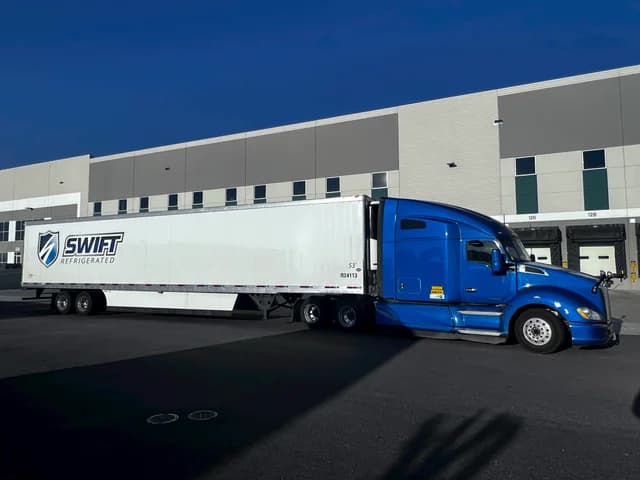
For many aspiring drivers, the appeal of trucking is not just financial. It is the autonomy of the road, the responsibility of moving essential goods, and the pride of mastering a trade that keeps the economy moving. Yet between that vision and the driver’s seat lies a crucial step: high-quality, structured CDL training.
The Quiet Authority of a Professional Driver
There is a calm confidence that develops when a driver understands their equipment, their responsibilities, and their role in the supply chain. It’s the difference between operating a truck and commanding it.
For new entrants, however, the scale of a Class A vehicle, federal regulations, and real-world driving conditions can feel overwhelming. This is where modern CDL skills courses shift the experience. Rather than treating licensing as a test to survive, these programs approach training as a professional onboarding process.
The best academies don’t rush students to the exam—they prepare them for the road that comes after.
Inside a High-Quality CDL Skills Training Program
Most reputable CDL training programs follow a structured progression that builds competence systematically. While formats vary, the core framework remains consistent across successful academies.
Phase One: Mechanical Awareness and Responsibility
Training begins with the foundation of professional driving: understanding the vehicle. Trainees learn comprehensive pre-trip inspections, air brake systems, coupling mechanisms, and safety checks. This phase instills accountability—drivers learn that safety begins before the engine starts.
Phase Two: Controlled Skills Development
On closed ranges, students practice backing maneuvers, lane positioning, and spatial control. Skills like straight-line backing, offset backing, and alley docking are taught incrementally. Mistakes are expected and corrected in a low-risk environment.
Phase Three: Road Integration
Once fundamentals are established, trainees move onto public roads under instructor supervision. This phase introduces traffic management, defensive driving, highway merging, and real-world decision-making. It’s where technical knowledge becomes instinct.
Phase Four: Licensing Preparation
The final stage focuses on state CDL exam readiness—both written and skills tests—while reinforcing habits that translate into long-term success beyond the test day.
Practical Strategies for Training Success
Excelling in a CDL program requires more than showing up. Successful trainees treat training like a professional commitment.
Memorize the Pre-Trip Inspection Early
The inspection is one of the most common failure points. Repetition, verbal practice, and visualization help turn checklists into muscle memory.
Understand Trailer Geometry
Backing a trailer defies intuition. Learning how small steering inputs translate into large trailer movements is a mental skill as much as a physical one.
Learn From Instructors’ Experience
Instructors are often former long-haul or regional drivers. Their real-world stories offer insight into scenarios no manual can fully explain.
A Career Reset: One Driver’s Story
Consider Daniel, a former warehouse supervisor in Arizona. After years of physically demanding work with limited advancement, he sought a more sustainable career. Enrolling in a CDL skills training program was a leap into unfamiliar territory.
“The truck felt enormous at first,” Daniel recalled. “But once I understood the systems, it stopped being intimidating and started feeling precise.”
Within weeks, Daniel’s confidence grew. After licensing, he transitioned into regional driving, earning more than his previous role while maintaining predictable home time. For him, CDL training wasn’t just job preparation—it was a reset.
Common Challenges New Drivers Face—and How to Avoid Them
Even strong trainees can stumble if they overlook key aspects of the transition.
Range Confidence vs. Real-World Complexity
Controlled environments don’t replicate crowded docks or tight truck stops. Staying cautious and adaptable is critical.
Regulatory Oversight
Electronic logs and Hours of Service rules are non-negotiable. Mastery of compliance is as important as vehicle control.
Physical and Mental Fatigue
Driving demands endurance. Establishing healthy sleep routines and nutrition habits during training pays long-term dividends.
Technology and the Modern Truck Driver
Today’s CDL training programs increasingly integrate technology into instruction. Drivers now interact with:
- Collision mitigation systems
- Lane-departure alerts
- Adaptive cruise control
- Fuel efficiency analytics
These tools enhance safety but do not replace judgment. Modern drivers are expected to understand how technology supports—not overrides—the human behind the wheel.
Training Pathways: Independent Schools vs. Carrier-Supported Programs
| Feature | Independent CDL School | Carrier-Affiliated Program |
|---|---|---|
| Upfront Cost | Typically higher | Often reduced or sponsored |
| Equipment | Varies by school | Standardized fleet |
| Job Placement | Self-directed | Often built-in |
| Focus | Licensing | Career integration |
Each path has advantages. The best choice depends on financial situation, learning style, and career goals.
Stability, Safety, and Long-Term Demand
Despite economic shifts, freight movement remains essential. Food, medicine, building materials, and consumer goods all depend on reliable drivers. According to industry data, demand for qualified CDL holders continues to outpace supply.
Automation discussions often overlook reality: complex loading docks, variable weather, and human interaction still require skilled drivers. Professional CDL training remains one of the most resilient entry points into the workforce.
Conclusion: Taking Control of the First Mile
A trucking career begins long before the first delivery. It starts with a decision to invest in structured learning, disciplined practice, and professional standards.
High-quality CDL skills training programs transform uncertainty into capability. They don’t just prepare students to pass an exam—they prepare them to operate safely, confidently, and sustainably in a demanding industry.
The road doesn’t reward shortcuts. It rewards preparation. And for those willing to commit, the horizon is closer than it appears.